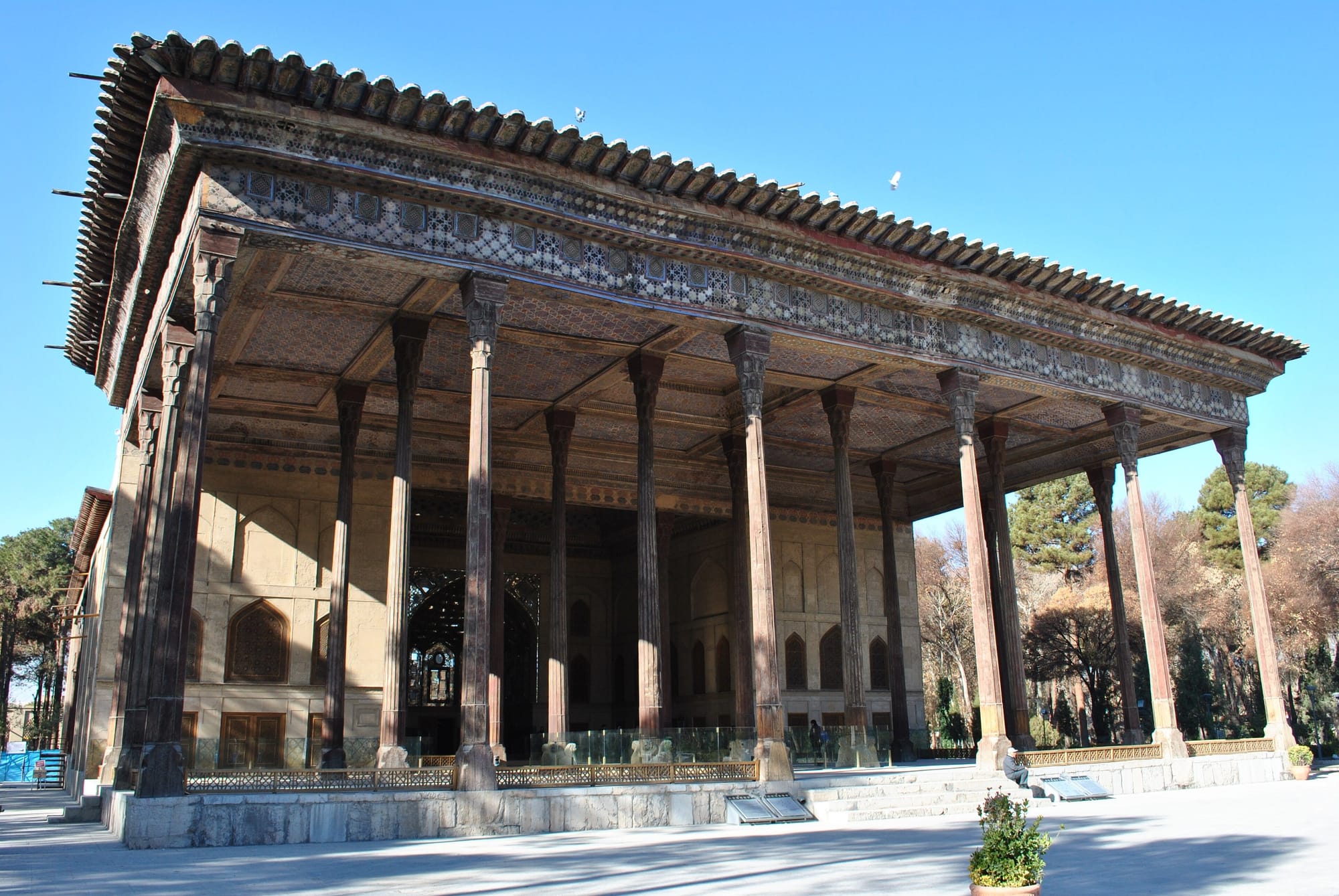
Joint military operations conducted by Israeli and American forces entered their second week with strikes targeting Isfahan, a city of profound historical significance, where bombardments have inflicted measurable damage upon several centuries-old palatial structures and heritage buildings that have long served as cornerstones of Iran's cultural and tourism landscape.
Isfahan occupies a dual identity that makes it among the most strategically contested cities in the current conflict. Revered as the former imperial capital of the Safavid dynasty, its skyline is defined by architectural masterworks spanning multiple centuries. Yet the city and its surrounding province simultaneously constitute a critical node in Iran's contemporary industrial and defense ecosystem, widely understood to contain substantial quantities of enriched uranium tied to the country's nuclear program.
According to WANA Agency, an Iranian news organization, components of the 17th-century Chehel Sotoun palace sustained damage when strikes hit the adjacent provincial government complex bordering the city's central public square on Monday, March 10. Footage circulating in the immediate aftermath suggests the palace's primary structure has remained standing, though the blasts unleashed devastating collateral destruction — shattering ornate glass windows, obliterating the intricate khatam marquetry adorning the interior walls, fragmenting the honeycomb-patterned vaulted muqarnas ceiling, and fracturing several Persian miniature-style murals of exceptional artistic merit.
The broader human toll of the conflict has been staggering, with more than 1,000 fatalities recorded since the United States and Israel initiated the first wave of strikes on February 28, with casualties concentrated predominantly in Iran and Lebanon. Estimates regarding Isfahan province specifically remain contested, with reports placing the death toll somewhere between 20 and 60 civilians killed.
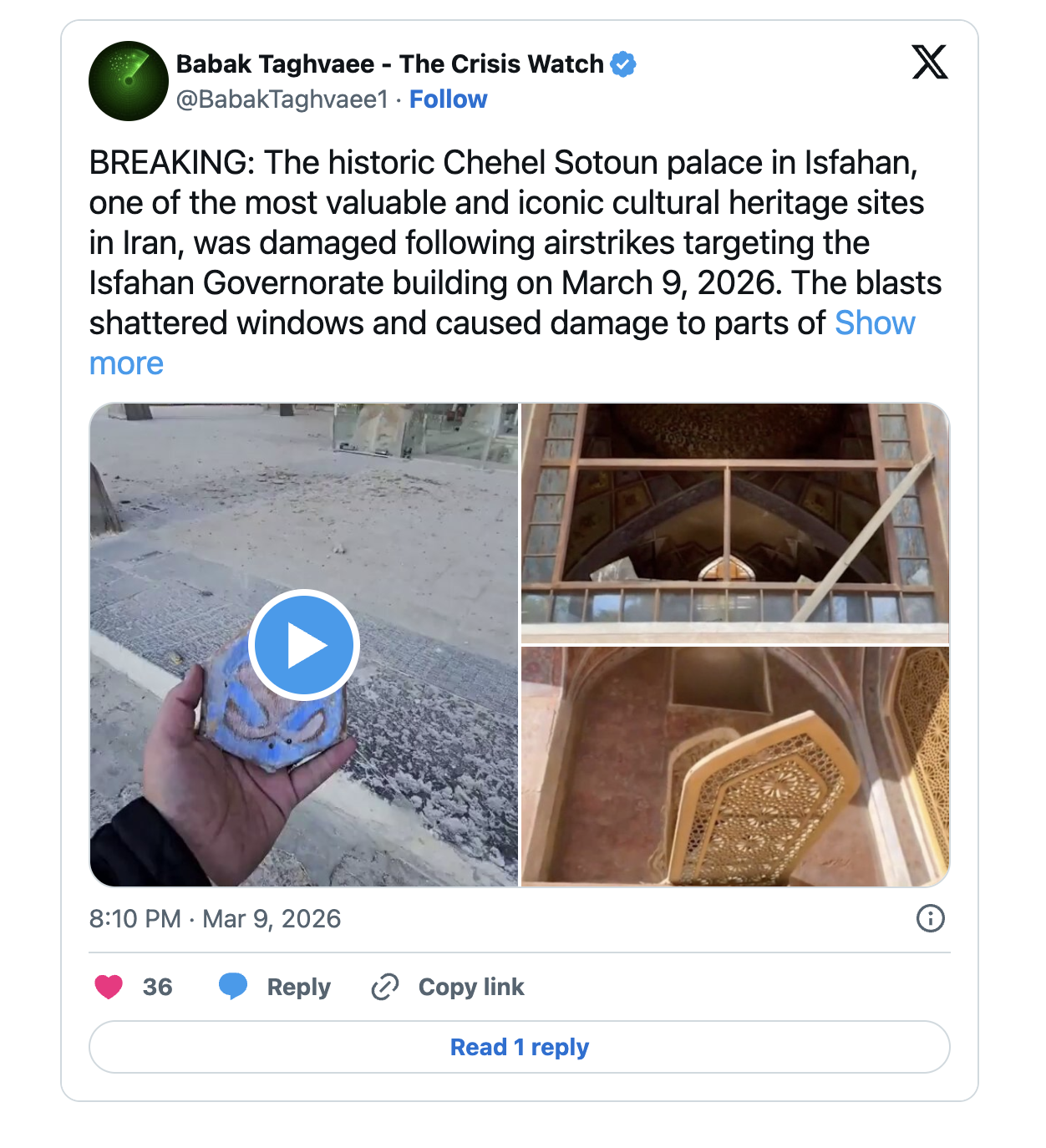
The Chehel Sotoun palace, internationally celebrated for its extraordinarily detailed fresco cycle, was inscribed onto UNESCO's World Heritage roster in 2011 as one of nine constituent gardens comprising the Persian Garden designation. Originally commissioned under Safavid ruler Shah Abbas the Great and brought to completion by his secondary successor, Shah Abbas II, in 1647, the complex functioned as a royal ceremonial venue — hosting coronation rites, elite entertainments, and formal diplomatic receptions for foreign envoys. Its evocative name, translating as "forty columns," derives from the optical illusion created when the palace's 20 slender wooden columns reflect in the vast ornamental pool stretching before its façade.
"This Safavid masterpiece is not only part of Iran's cultural and civilizational heritage, but also a cultural treasure belonging to all humanity," declared Esmaeil Baqaei, spokesperson for Iran's Ministry of Foreign Affairs, in a statement on X issued earlier today.
The targeting of Isfahan's governmental precinct and its adjacent heritage corridor follows just one week after shockwaves generated by a joint Israeli-American strike on the capital, Tehran, inflicted serious structural damage upon the Qajar-era Golestan Palace — establishing a troubling pattern of irreplaceable historical monuments bearing the incidental consequences of precision military operations conducted in densely layered urban environments.
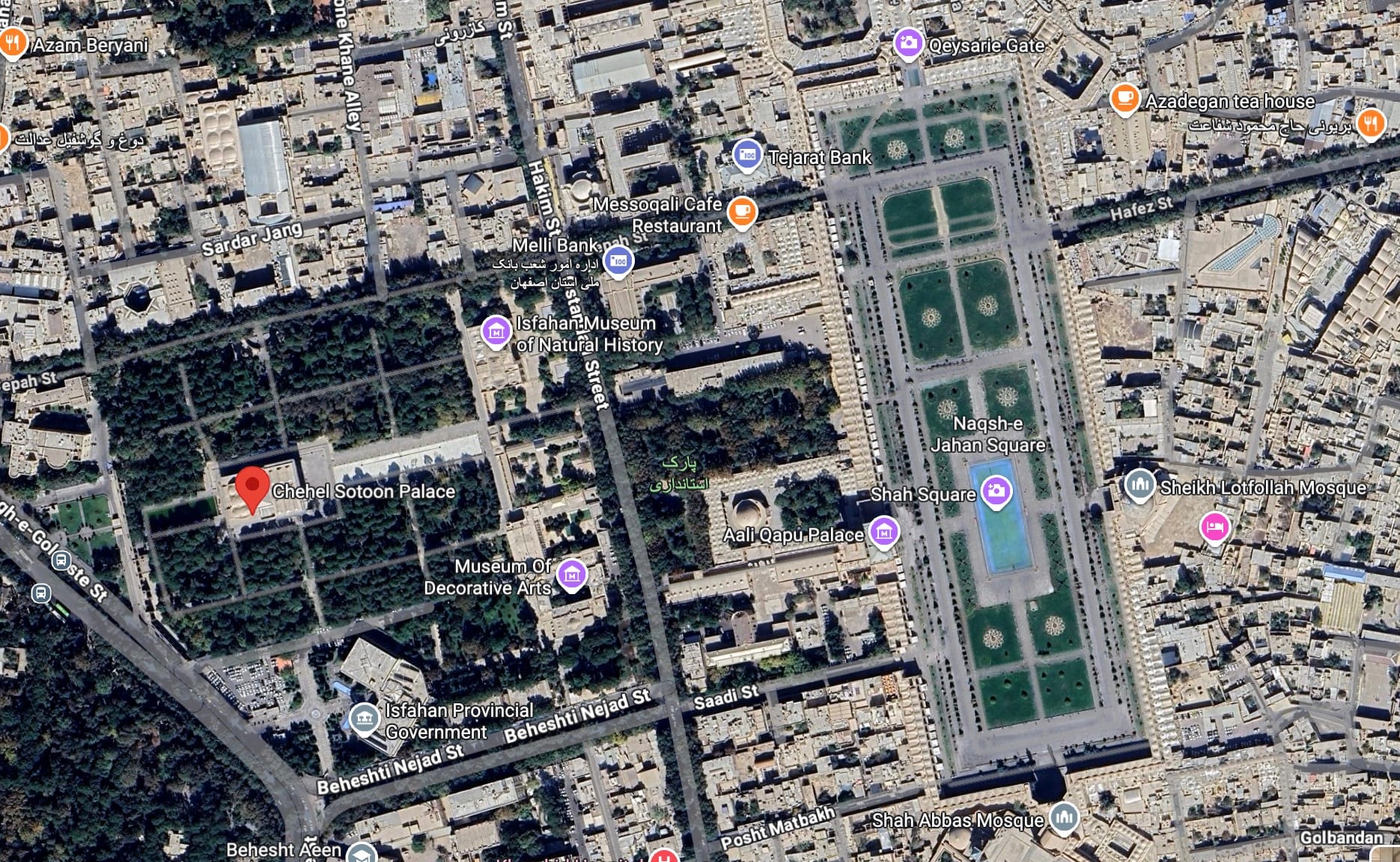
Reporting by IranWire further documents collateral destruction across multiple institutions clustered around the provincial government building and the palace compound. Among the affected sites are the restored Rakib-Khaneh structure, which houses the city's Museum of Decorative Arts; the Talar-e Teimuri hall, home to the Natural History Museum; and the Museum of Contemporary Art, whose ceiling is reported to have partially collapsed under blast pressure — a loss with acute implications for the preservation of modern Iranian artistic production.
Directly across from this governmental and museum cluster lies Naqsh-e Jahan public square, enshrined as Meidan Emam on UNESCO's World Heritage list since 1979. The perimeter of this expansive Safavid-era plaza is defined by an ensemble of dynastic monuments of the highest architectural caliber, among them the Masjed-e Shah (Royal Mosque), the Sheikh Lotfollah Mosque, the Ali Qapu palace, and the storied Qeysarie gate.
Iranian media outlets documented that the windows of the Ali Qapu palace, alongside those of numerous traditional handicraft bazaars and neighboring commercial art galleries, were blown out by the concussive force of explosions in the vicinity of the square.
The Israeli military maintained that the coordinated strike campaign spanning Tehran, the city and province of Isfahan, and the south-central city of Shiraz was calibrated to degrade Iran's military capabilities and preempt or suppress retaliatory operations. Reported targets across Isfahan included combat aircraft and air force installations, suspected ballistic missile facilities, and production warehouses belonging to the sanctioned unmanned aerial vehicle manufacturer Shahed Aviation Industries.
The strikes have drawn swift and pointed condemnation from the academic and cultural communities. Among the voices speaking out is Assal Rad, a historian specializing in the modern Middle East and a fellow at the Arab Center in Washington, DC, who amplified footage of the Chehel Sotoun destruction by sharing it on X.
"Apparently destroying a people's cultural heritage is part of liberating them," Rad wrote.