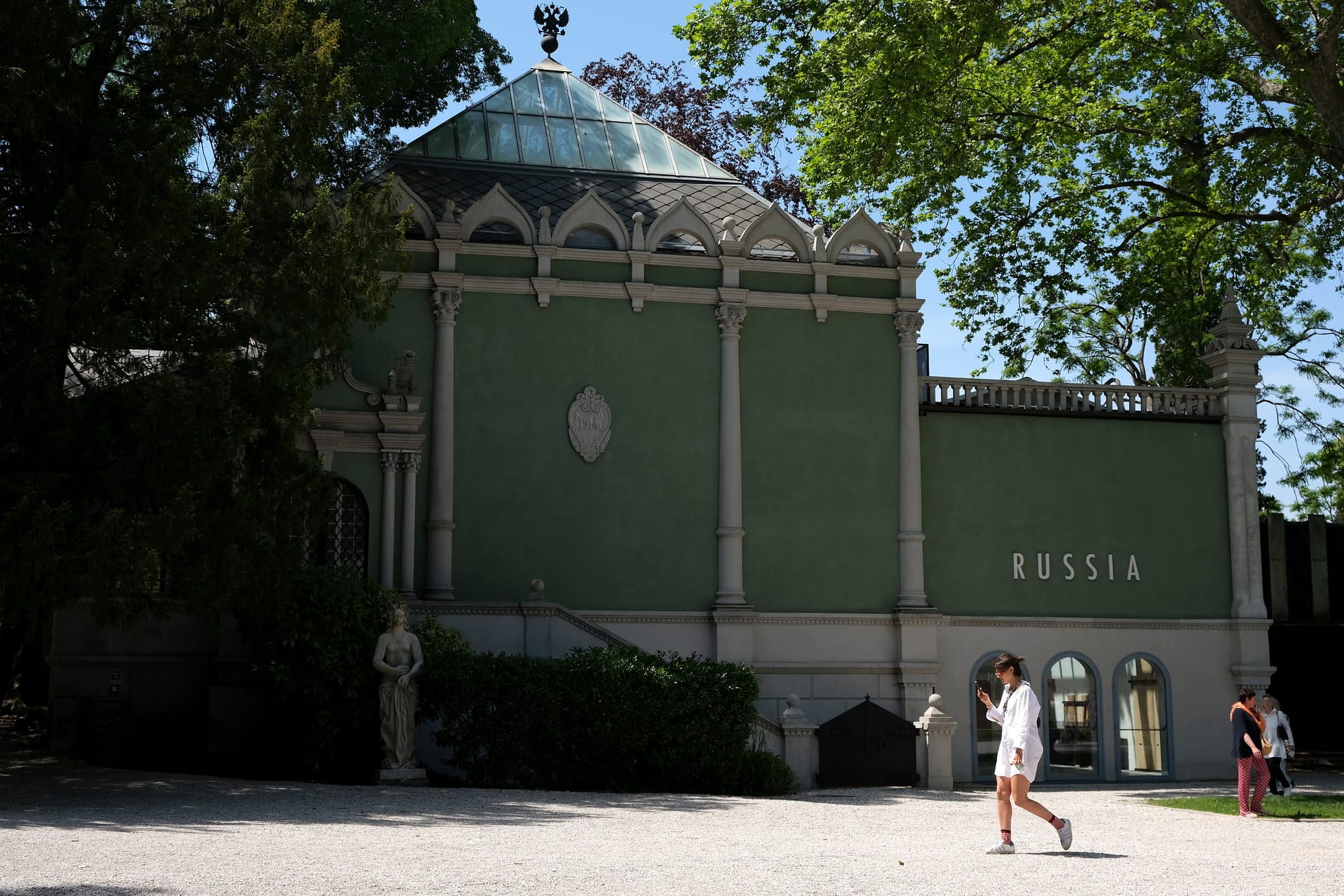
A sweeping coalition of artists, academics, curators, journalists, and elected officials has launched a coordinated campaign urging Venice Biennale leadership to reckon with the ethical consequences of Russia's reinstatement as a participating nation. The open letter, spearheaded by the Arts Against Aggression International Movement and circulated this week, demands that Biennale organizers confront what signatories describe as the dangerous normalization of a wartime state's cultural diplomacy. The petition follows a formal announcement from Biennale officials confirming Russia's inclusion in the 61st edition, scheduled to open May 9 and remain on view through November 22.
Institutional pressure on the Biennale to withdraw Russia's pavilion invitation has intensified considerably, with the European Union now entering the fray. The EU's executive body issued a formal statement warning that it is actively evaluating the "suspension or termination" of an active funding arrangement with the Biennale Foundation should Russia's participation proceed as planned — a development that marks a significant escalation in the geopolitical dimensions of what has historically been framed as a purely cultural dispute.
Should the Russian pavilion proceed, it will represent the country's first active presence at the event since its conspicuous absence from both the 2022 and 2024 editions.
Russia's exclusion from the 2022 Biennale was not a top-down institutional decision but rather a principled act of artistic dissent. Following the full-scale military invasion of Ukraine, the two artists designated to represent Russia — Kirill Savchenkov and Alexandra Sukhareva — voluntarily withdrew from the exhibition. In a joint public statement, they declared that "there is no place for art when civilians are dying under the fire of missiles, when citizens of Ukraine are hiding in shelters, when Russian protesters are getting silenced."
The 2024 edition told a more complex story. With the Russian pavilion once again unoccupied, Moscow orchestrated a geopolitically charged arrangement, subletting the space to Bolivia — a move widely interpreted as transactional diplomacy tied to Russia's interest in Bolivia's lithium reserves. Throughout the exhibition, a temporary banner bearing the words "Estado Plurinacional de Bolivia" adorned the pavilion's facade, rendering the Russian state's continued influence invisible yet structurally intact.
The 2026 iteration marks a decisive departure from those precedents. Russia is mounting a fully realized exhibition titled The Tree Is Rooted in the Sky, featuring a roster of at least 38 artists and musicians as listed on the Biennale's official website. Vladimir Putin's cultural envoy, Mikhail Shvydkoy, framed the return in defiant terms, telling Artnews via email that "Russia never left the Venice Biennale" and characterizing the 2026 participation as proof that international campaigns to isolate Russian cultural institutions have ultimately failed.
More than 6,000 voices are pushing back forcefully against that interpretation. The petition, titled "Stop the Normalization of War Crimes through Art," contends that Russia's state-sanctioned pavilion stands in direct contradiction to the Biennale's own March 2022 commitment to sever institutional ties with official Russian entities for the duration of the ongoing war in Ukraine.
"This position established an important ethical commitment by one of the world's leading cultural institutions," the letter states. "Today, as Russia's war against Ukraine continues, the announced presence of a Russian state pavilion raises urgent questions about how this principle is being upheld."
The Biennale Foundation responded to mounting criticism through a press release asserting its foundational opposition to cultural exclusion or censorship in any form. "La Biennale, like the city of Venice, continues to be a place of dialogue, openness, and artistic freedom, encouraging connections between peoples and cultures, with enduring hope for the cessation of conflicts and suffering," the statement read — a position that frames artistic access as an intrinsic good, independent of the political contexts from which participating nations emerge.
The open letter directly challenges this framing, arguing that invoking the principle that "culture is above politics" is itself a political act — one that, in Russia's case, has been deliberately weaponized to advance state objectives "while disguising them behind the language of cultural exchange and dialogue." The signatories suggest that cultural neutrality, when extended to an actively warring state, functions less as openness and more as institutional complicity.
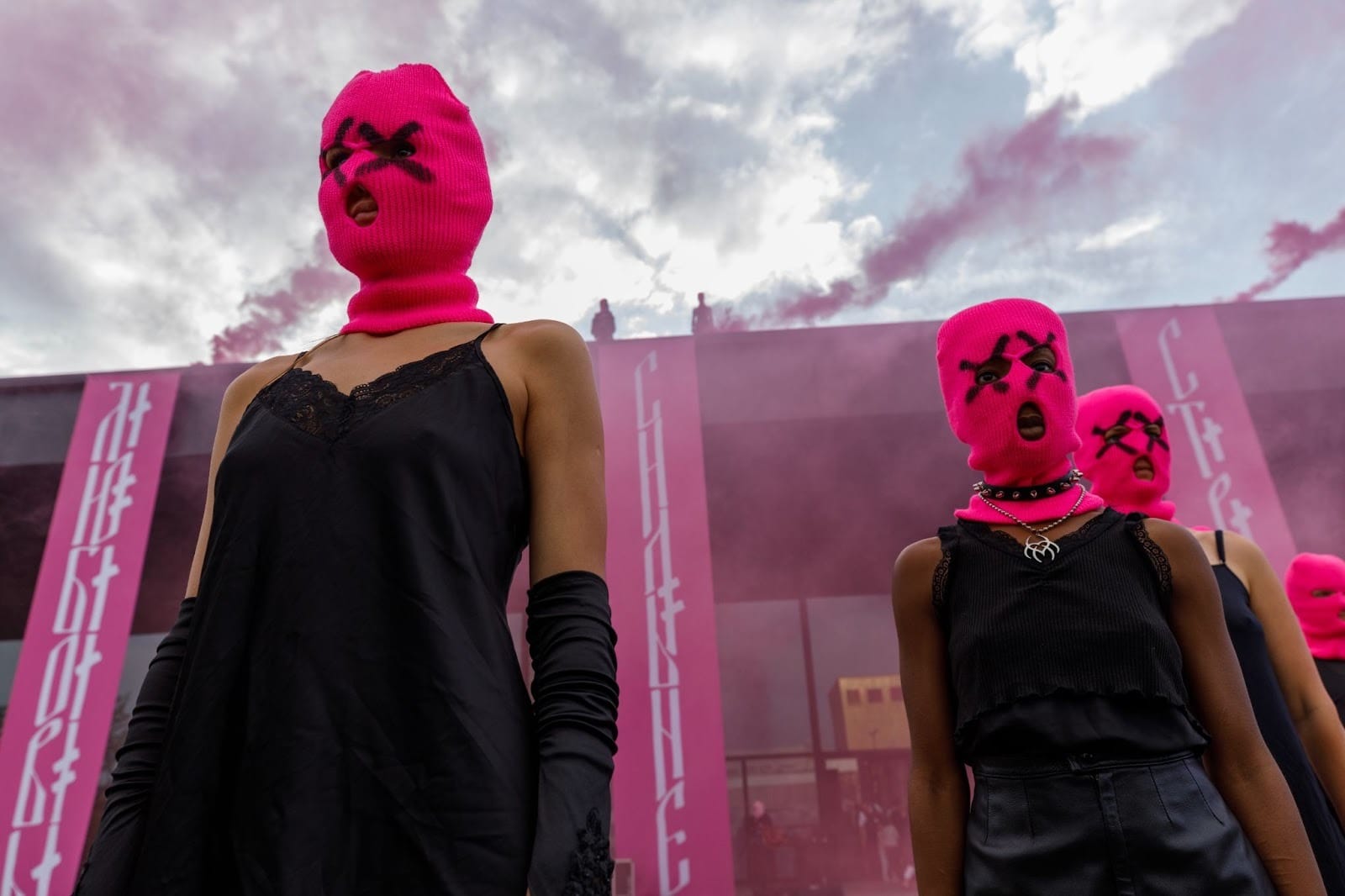
Among the letter's most prominent signatories is Nadya Tolokonnikova, co-founder of the feminist dissident collective Pussy Riot. The group's precarious legal standing in Russia renders her endorsement particularly charged: late last year, Russian authorities moved to classify Pussy Riot as an extremist organization, a designation the Tverskoy District court in Moscow formally upheld on December 15. Separately, a Moscow court had already handed down prison sentences in absentia to five members of the exiled collective on charges stemming from protest performances and anti-Putin artistic works.
"The participation of official Russia in the Biennale is a serious blow to Europe's Security," Pussy Riot declared in a statement published simultaneously on Instagram and X last Thursday. "Since the start of the full-scale invasion of Ukraine, cultural 'soft power' has become part of Russia's military doctrine and an instrument of hybrid warfare. The Kremlin has long used culture as a continuation of foreign policy — and as a way to legitimize the regime abroad."
"Expect Resistance," the collective's statement continued. "We will drown out the noise you export – death, tragedy and lies."
The Russia debate at the Biennale does not exist in isolation. Cultural advocates have mounted comparable campaigns demanding Israel's exclusion from the festival in response to its ongoing military campaign in Gaza. During the 2024 edition, the Israeli pavilion was partially closed by its own artist and curatorial team — a gesture that drew both recognition and sharp criticism from those who viewed it as a symbolic gesture that fell well short of genuine accountability.
Contacted directly via email, Tolokonnikova did not mince words regarding Venice Biennale President Pietrangelo Buttafuoco's decision to extend an invitation to Russia.
"It's a shame that neo-fascists across Europe hold the highest positions of power and openly support Vladimir Putin," Tolokonnikova told Hyperallergic. She declined to specify what form any planned resistance or direct action might take.
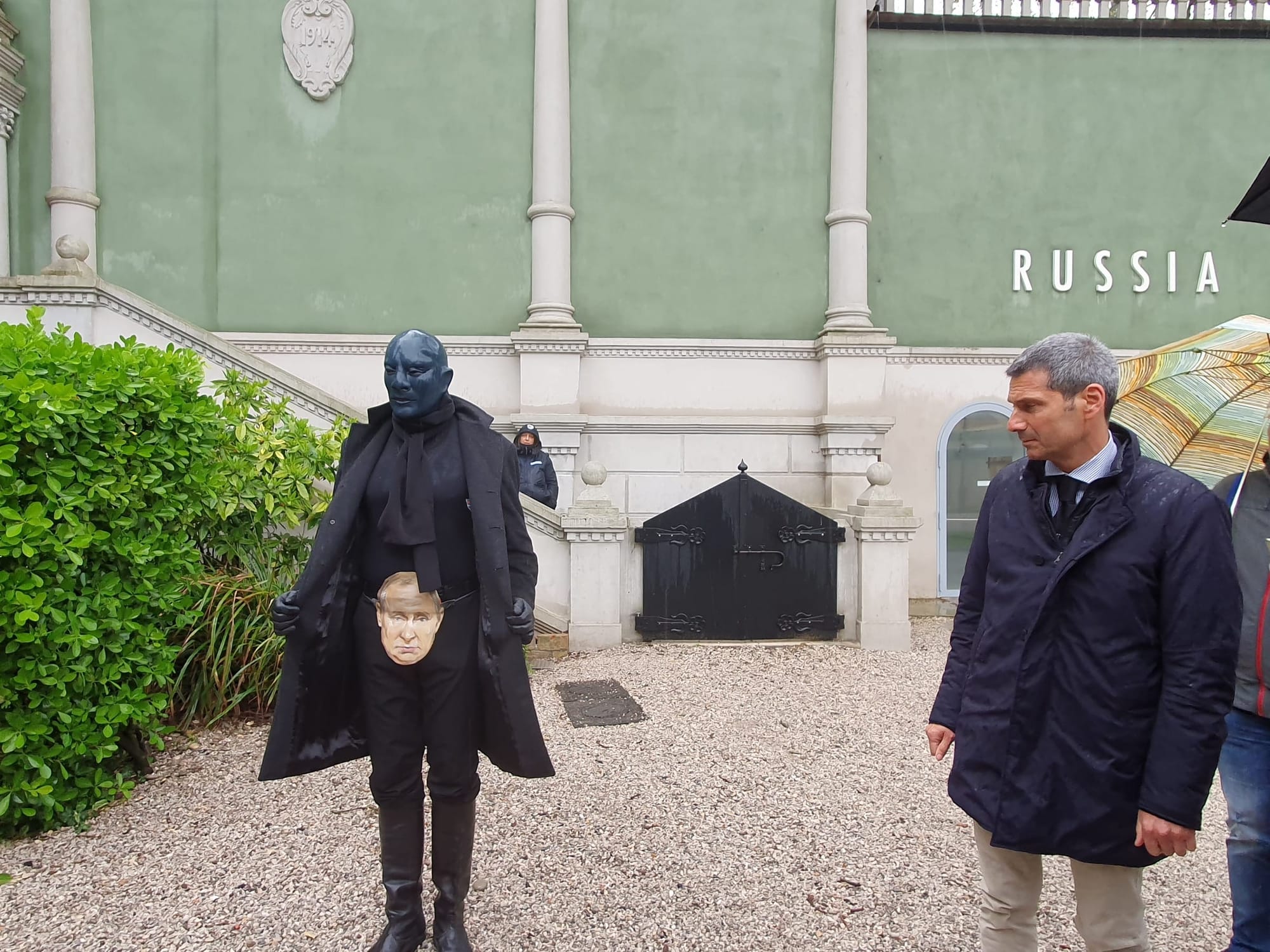
Italy's culture ministry entered the discourse last Thursday with a statement distancing the government from the Biennale Foundation's decision, clarifying that Russia's reinstatement to the 61st International Art Exhibition "was decided entirely independently by the Biennale Foundation, despite the Italian government's opposition." The ministry further underscored Italy's active role in Ukrainian cultural reconstruction efforts, affirming its commitment to preserving artistic heritage that has been "devastated by Russian bombing."
As of publication, the petition had accumulated 6,360 verified signatures on Change.org. Notable signatories include Yulia Lytvynets, director of the National Art Museum of Ukraine in Kyiv; Olena Siyanko, executive director of the Ukrainian Museum in New York; and Pina Picierno, an Italian member of the European Parliament.
"The Biennale should remain a place where art does not conceal or concede to violence, but illuminates truth, memory, and responsibility — and resists any attempt to instrumentalize culture in the service of dictatorship, imperial domination, and oppression," the letter concludes.